

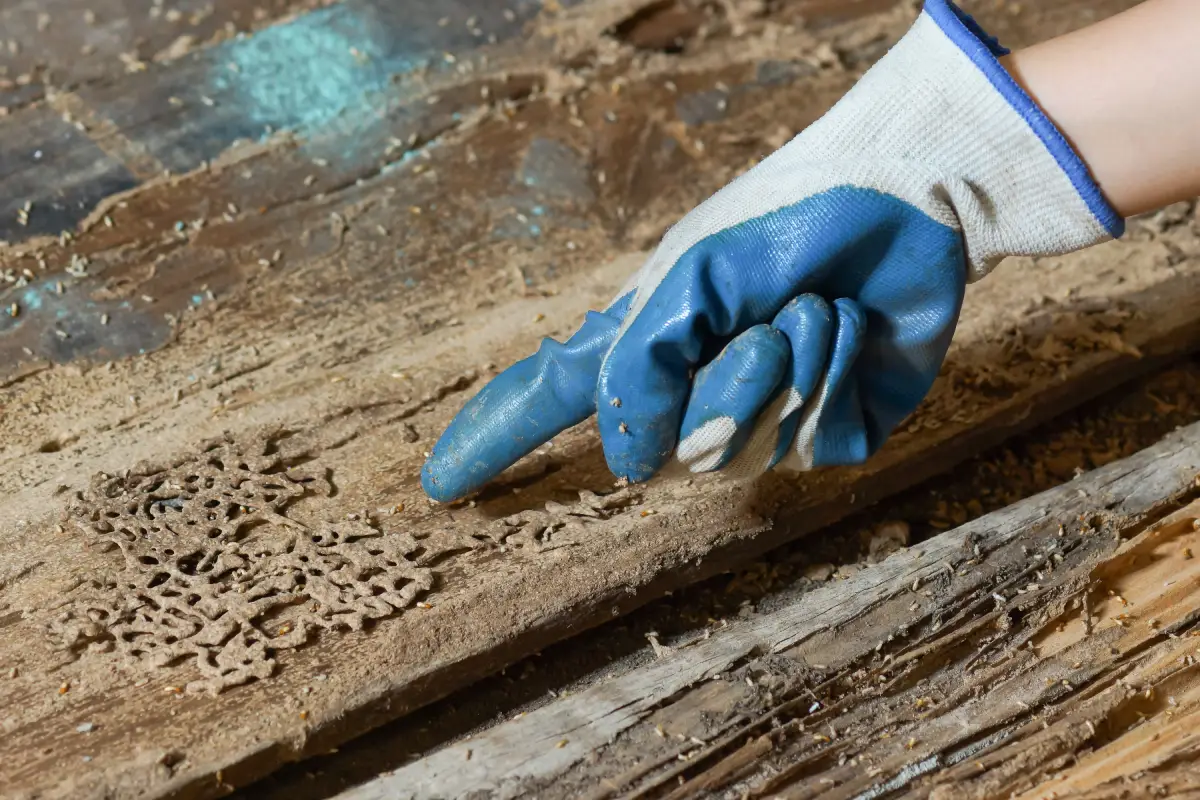
“Termites” gets used as one catch-all word, but Mississippi is actually home to a few different species that behave in very different ways — and knowing which one you’re dealing with changes both the urgency and the treatment. For Clarksdale homeowners, the practical answer is simpler than it sounds.
Subterranean termites: the one your home is actually at risk from
Eastern subterranean termites are found in every county in Mississippi and are, by far, the species doing the damage in North Mississippi. They need contact with soil moisture to survive, which is why they build the pencil-wide mud tubes you’ll sometimes see running up a foundation wall — those tubes are their protected path between the soil and the wood they’re feeding on. According to Mississippi State University Extension, eastern subterranean termites in North Mississippi typically swarm between April and June, usually triggered by a warm rain. A cluster of discarded wings near a window or light fixture, hollow-sounding wood, or mud tubes on the foundation are the classic warning signs.
Drywood termites: real, but not really a Clarksdale problem
Drywood termites nest directly inside dry wood with no soil contact at all, which is what makes them different — and why a house can have an infestation with no mud tubes anywhere. They leave behind small, uniform, sand-like fecal pellets (called frass) instead. The catch for Clarksdale homeowners: per Mississippi State University Extension, established drywood termite populations in Mississippi are concentrated in the coastal counties, not the north. A true drywood infestation this far from the coast is uncommon, though it’s not impossible — they occasionally hitch a ride in infested furniture, antiques, or lumber brought in from elsewhere. Worth knowing the difference; not worth losing sleep over.
The one to actually keep an eye on: Formosan termites
A third species is worth a mention. Formosan termites are more aggressive than eastern subterranean termites, build aerial nests that don’t always need ground contact, and swarm at night in late April to mid-May, often drawn to porch lights. They’re established in roughly a third of Mississippi’s counties as of 2024, and MSU Extension notes isolated detections as far north as Oxford — close enough to Clarksdale that it’s a species local homeowners should at least recognize.
Side-by-side differences
| Feature | Subterranean | Drywood | Formosan |
|---|---|---|---|
| Soil contact | Required | None | Not required (aerial nests) |
| Signature sign | Mud tubes | Uniform fecal pellets (frass) | Large swarms at night, often around lights |
| Swarm window (North MS) | April–June | May–June (mainly coastal) | Late April–mid-May |
| Colony size / damage speed | Large colonies, steady damage | Smaller colonies, slower damage | Very large colonies, faster damage |
When to call a professional
Any winged swarmers indoors, mud tubes on the foundation or crawlspace piers, wood that sounds hollow when tapped, or small pellet-like droppings near wood trim are all reasons to get a professional inspection rather than wait and see — termite damage doesn’t announce itself until it’s already extensive.
Decades of doing this locally
Tri-State Termite & Pest Control Co. has been a family-owned, Clarksdale-based business since 1951, and is a member of both the Mississippi Pest Control Association and the National Pest Control Association. Customers mention the same familiar faces returning visit after visit — one review simply reads, “Mr. John has taken great care of us!!!” — the kind of consistency that matters when you’re trusting someone to check your foundation every year. More real reviews are on the company’s reviews page.
Get a free inspection
If you’ve spotted wings, mud tubes, or damaged wood, don’t wait for swarm season to confirm what you’re dealing with. Tri-State offers a free inspection and can tell you plainly whether it’s subterranean, Formosan, or nothing to worry about — reach out for professional termite control in Clarksdale today.